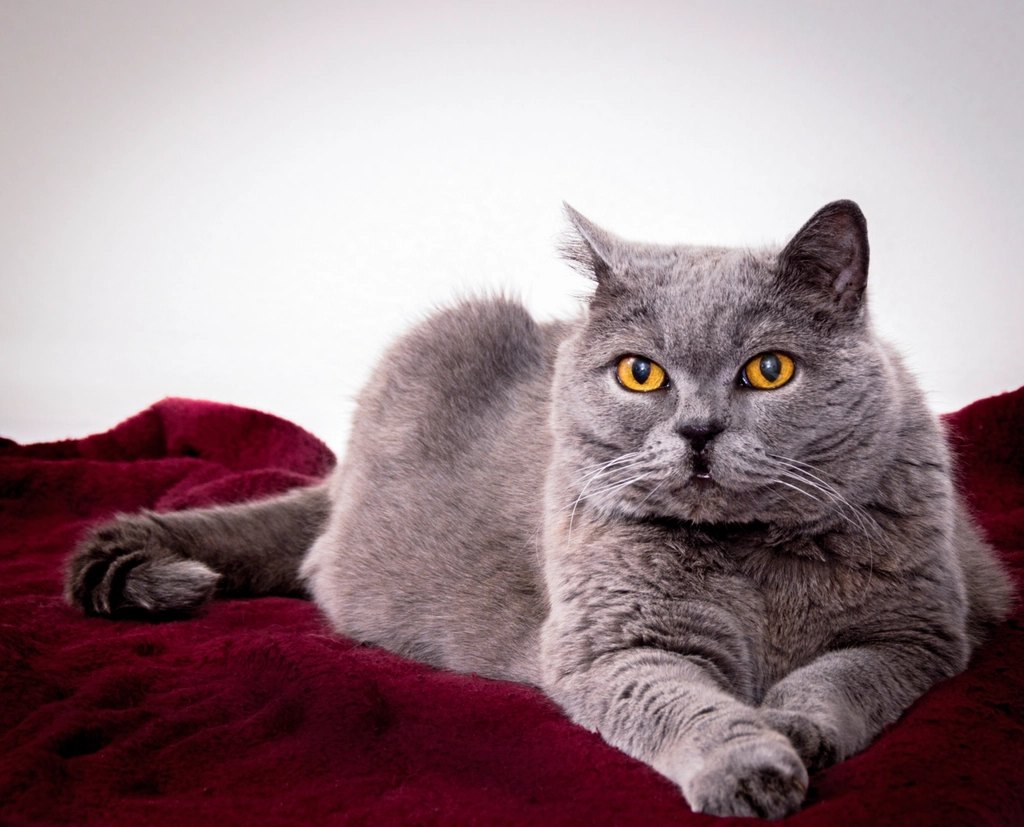
Most indoor cats in North America are overweight — and almost always because the bowl is too generous, not because the cat is greedy. The right amount comes down to calories, and the math is simpler than you'd think.
The basic rule: ~20 calories per pound
A healthy adult indoor cat needs roughly 20 kcal per pound of ideal body weight per day. Active or outdoor cats need more; spayed/neutered and senior cats often need less.
Daily feeding chart (adult cats)
| Ideal Weight | Calories/day | Dry food (approx.) | Wet food (3-oz cans) |
|---|---|---|---|
| 8 lb (small) | ~160–180 kcal | ⅓–½ cup | ~2 cans |
| 10 lb (average) | ~200–220 kcal | ½ cup | 2–2½ cans |
| 12 lb (large) | ~240–260 kcal | ½–⅔ cup | ~3 cans |
These are starting points: calorie density varies a lot between brands, so the label on your food wins, and body condition is the real judge — you should feel your cat's ribs easily but not see them.
Wet, dry, or both?
Wet food adds water (great for urinary health) and is harder to overfeed; dry is convenient and budget-friendly. Many owners do wet meals plus a small measured amount of dry. What matters most is total calories and a quality formula — our indoor cat food picks compare solid options.
How often to feed
- Adults: two meals a day, 8–12 hours apart. Free-feeding is the #1 path to an overweight cat.
- Kittens (under 1 year): three to four small meals — they need roughly twice the calories per pound of adults.
- Seniors: same schedule, but weigh them regularly; unexplained weight change is a vet conversation (see why is my cat not eating).
Treats count
Keep treats under 10% of daily calories — that's about 20 kcal for an average cat, or roughly 2–3 commercial treats. Yes, really.
Adjust with your vet
These ranges assume a healthy adult. Kittens, pregnant or nursing cats, and cats with diabetes, kidney or thyroid conditions have different needs — your veterinarian sets the plan.